A Guide to Wainscoting
Disclaimer: As an Associate I earn from qualifying purchases at no extra cost to you. See more here.
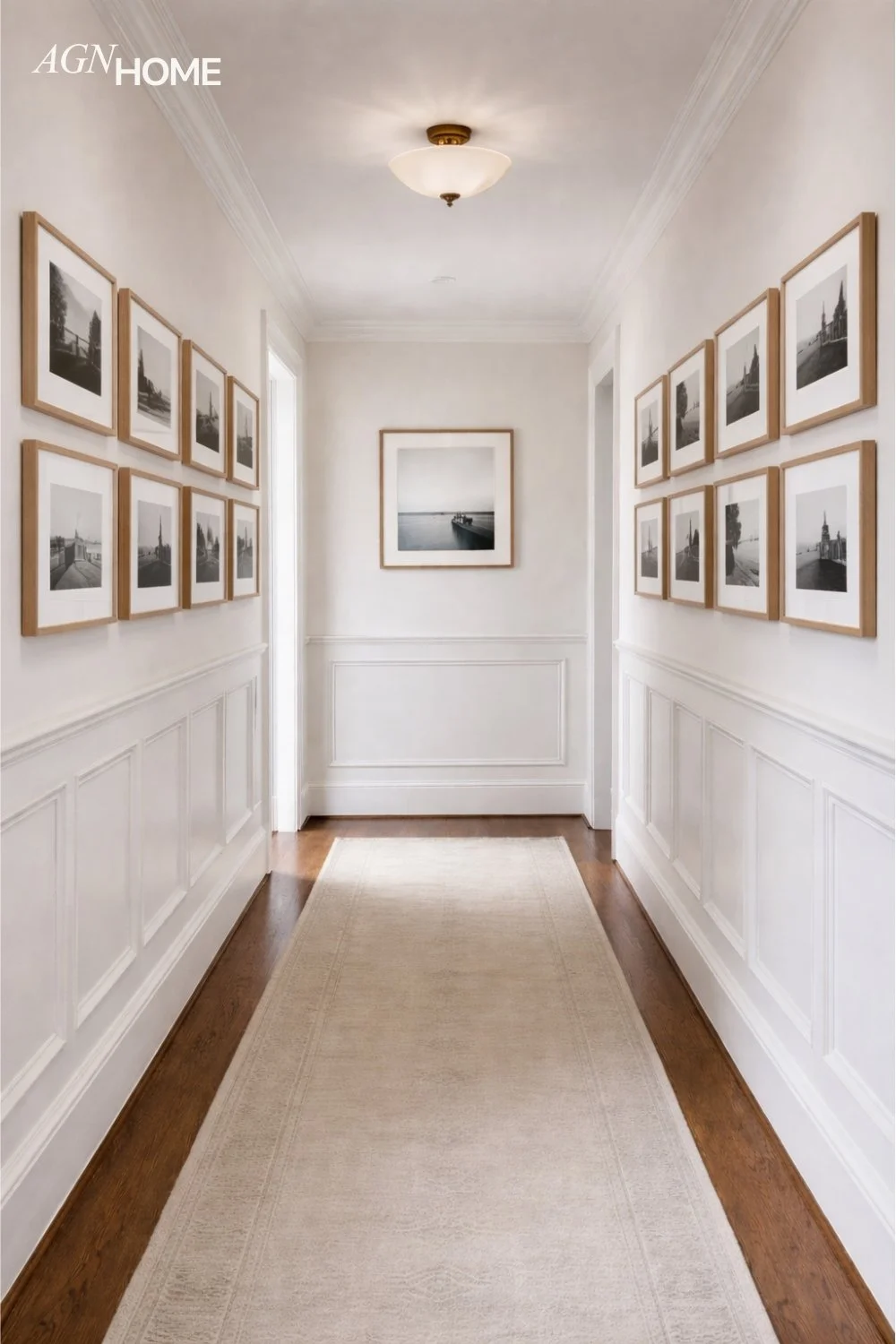
Wainscoting is a type of paneling typically installed on the lower portion of a wall, though modern applications often extend it higher, or even full height. It can be found in hallways, stairwells, dining rooms, bathrooms, and main living spaces. At its core, wainscoting adds architectural structure to walls that would otherwise read as flat planes. By dividing a flat surface into zones, it creates rhythm, proportion, and a sense of architectural intention. What would otherwise read as blank drywall begins to feel intentional.
In this guide, we’ll cover what wainscoting is, where it originated, why it works so well visually, the most common styles, how height and spacing affect a space, and how to think about finishes and paint choices.
A Brief History of Wainscoting
The word wainscoting comes from “wainscot,” referring to fine hardwood paneling imported into Europe. Early homes were built with stone, brick, or plaster walls that were cold, uneven, and vulnerable to damage. Wood paneling insulated rooms, protected walls from furniture and foot traffic, and helped regulate moisture in damp climates.
Originally, wainscoting was a luxury, but as building methods evolved and walls became smoother and more durable, wainscoting shifted from necessity to a design element. Today, wainscoting is used primarily to introduce proportion, texture, and visual rhythm, while still offering some practical durability in high-traffic areas.
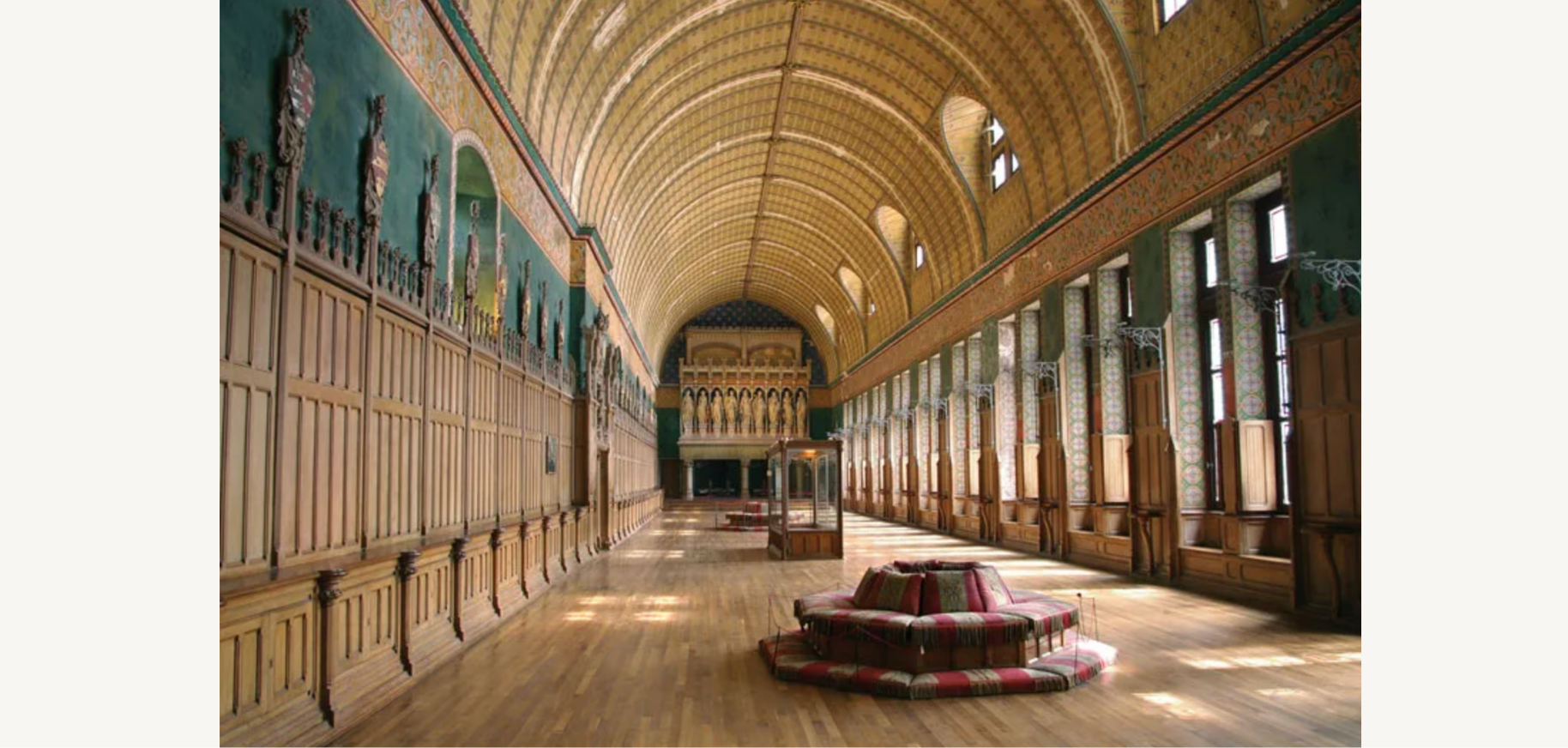
Wainscot in the great hall at the Château de Pierrefonds, Oise, France.
© Rudi Vandeputte/Shutterstock.com
Why Wainscoting Works
The reason it has endured has less to do with tradition and more to do with how the eye reads space. From a design perspective, wainscoting succeeds because it breaks a wall into zones. Tall, uninterrupted walls can feel visually unanchored or overwhelming, especially in rooms with standard ceiling heights. By visually dividing the wall horizontally, wainscoting establishes a base and a top, making spaces feel more human-scaled.
It also creates alignment opportunities. When the top rail relates to window sills, door casings, stair rails, or furniture proportions, the room feels cohesive. The alignment is subtle, but the effect is immediate.
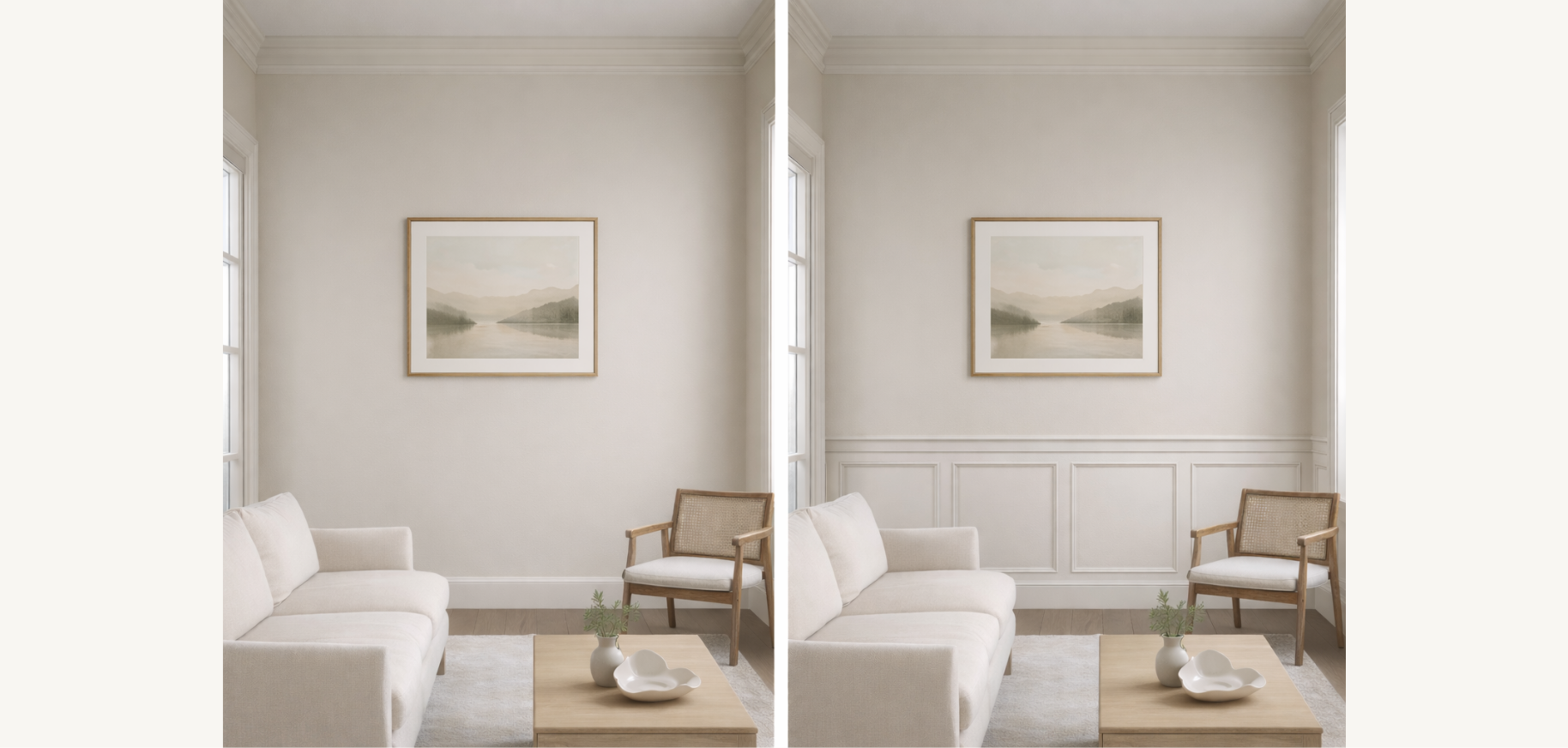
Adding paneling changes how the wall carries weight. The lower zone becomes grounded, and the upper portion feels lighter by contrast. The room reads more proportioned, even though nothing else has changed.
Benefits of Wainscoting
Wainscoting isn’t purely aesthetic.
It helps protect drywall, especially in areas prone to scuffs and damage like hallways, stairwells, dining rooms, and entryways. Chair backs, shoes, pets, and everyday movement are less likely to leave marks when walls are reinforced with paneling.
It’s also relatively accessible from a cost perspective. MDF allows for crisp profiles and consistent results at a lower price point than solid wood, making wainscoting achievable in many renovations.
Most importantly, it’s versatile. Depending on profile, spacing, height, and finish, wainscoting can feel modern, traditional, farmhouse-inspired, or transitional. The same technique reads differently from one home to the next.
Understanding Wainscoting Height and Proportion
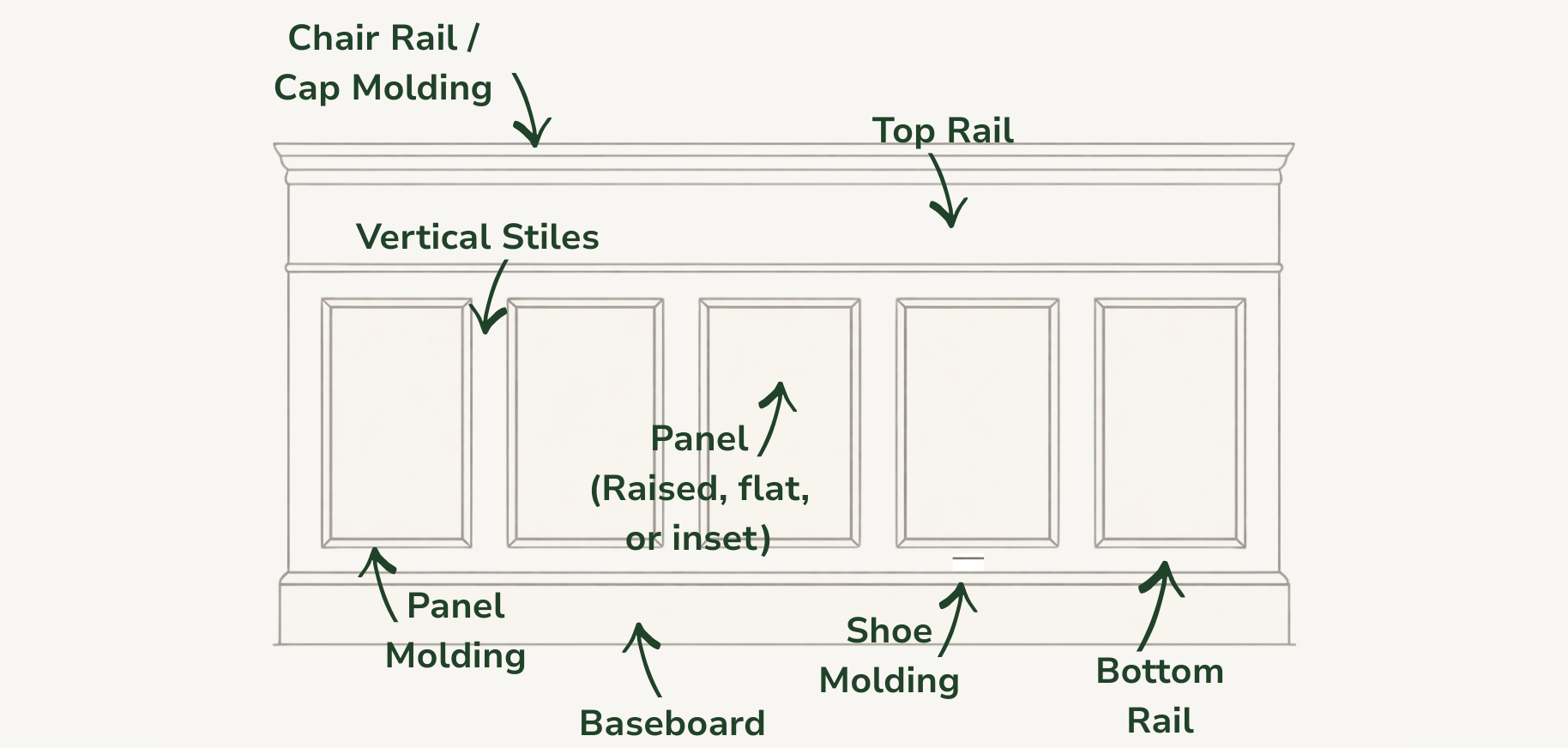
Height is one of the most overlooked decisions. Wainscoting that’s too short can feel arbitrary, while installations that are too tall can overwhelm a room if they aren’t intentional.
Traditionally, the top rail aligned with chair-back height—roughly 30–36 inches. Modern applications often extend higher, especially in dining rooms, stairways, and bedrooms.
Proportions that often feel balanced
In rooms with 8-foot ceilings, 36–48 inches typically maintains visual balance.
In rooms with 9–10 foot ceilings, extending up to 60 inches can feel more intentional.
Full-height paneling shifts the wall from background to architectural feature.
Existing elements matter. Windows, outlets, switches, and door casings should be considered before finalizing height.
Panel Spacing and Layout
Spacing matters as much as style. Panels that are too narrow feel busy; panels that are too wide can feel sparse and unresolved.
Generally, inner panels tend to work best when they fall within a consistent visual rhythm rather than strict measurements. Symmetry matters more than exact dimensions. Slightly adjusting panel widths to maintain balance is preferable to forcing rigid spacing.
Electrical planning should happen early. Outlets and switches ideally fall within panels rather than landing directly on trim or battens.
Materials and Installation Approach
Wainscoting can be approached in two ways: built from raw trim pieces or assembled from pre-made kits and templates.
Building from plain boards allows for full control over spacing, height, and proportion. It’s often the better option when working around uneven walls or unique ceiling heights.
Pre-made kits and panel templates offer speed and consistency. They tend to work well in straightforward rooms where walls are square and proportions are predictable.
The decision isn’t about difficulty. It’s about control. If proportion is the priority, building from scratch allows more adjustment. If efficiency is the priority, templates simplify the process.
Common Types of Wainscoting
Wainscoting styles are often discussed as construction methods, but they’re easier to understand when viewed by how they visually shape a wall. The same materials can feel traditional, modern, or transitional depending on profile, spacing, and height. These are the most common types, organized by how they tend to read in a space.
Beadboard
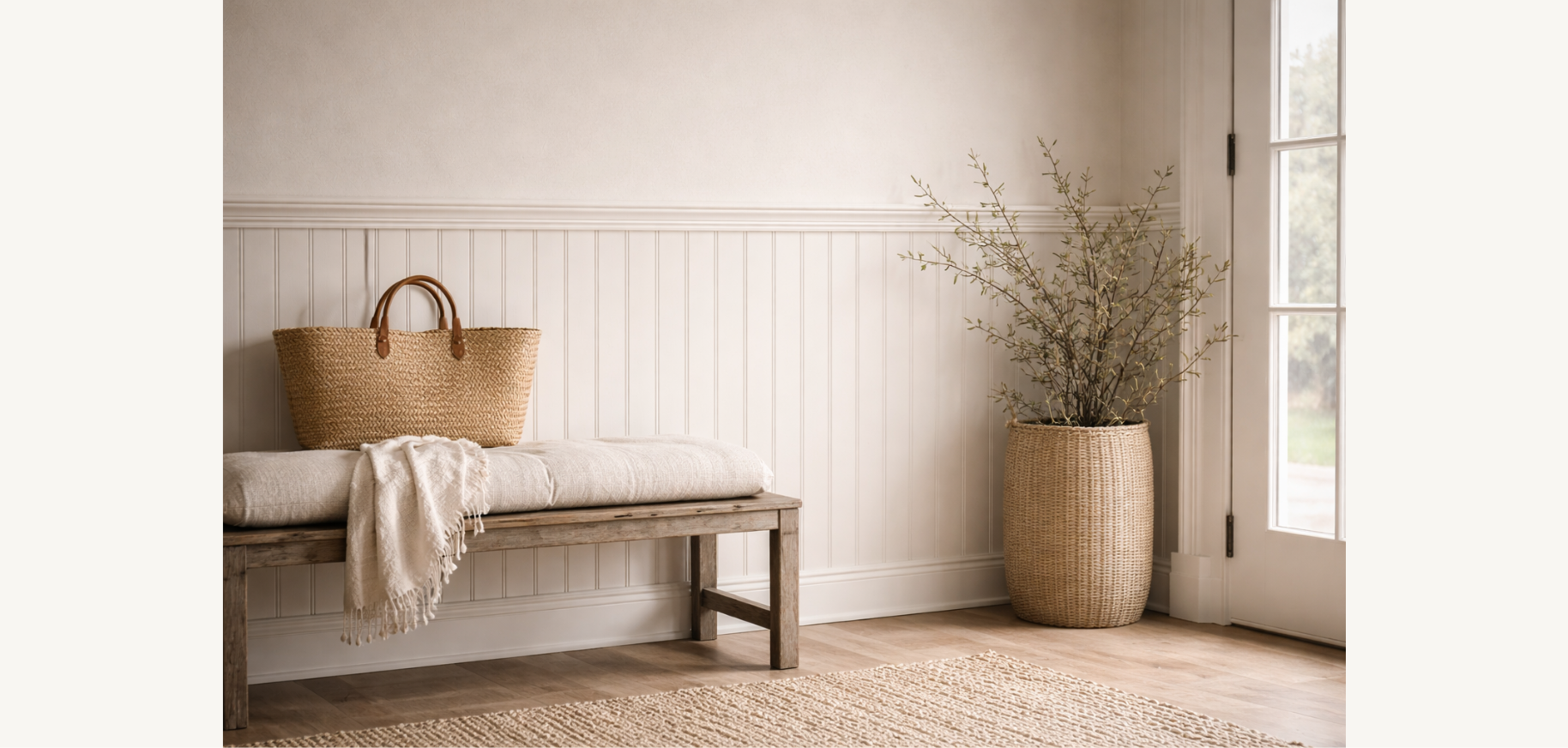
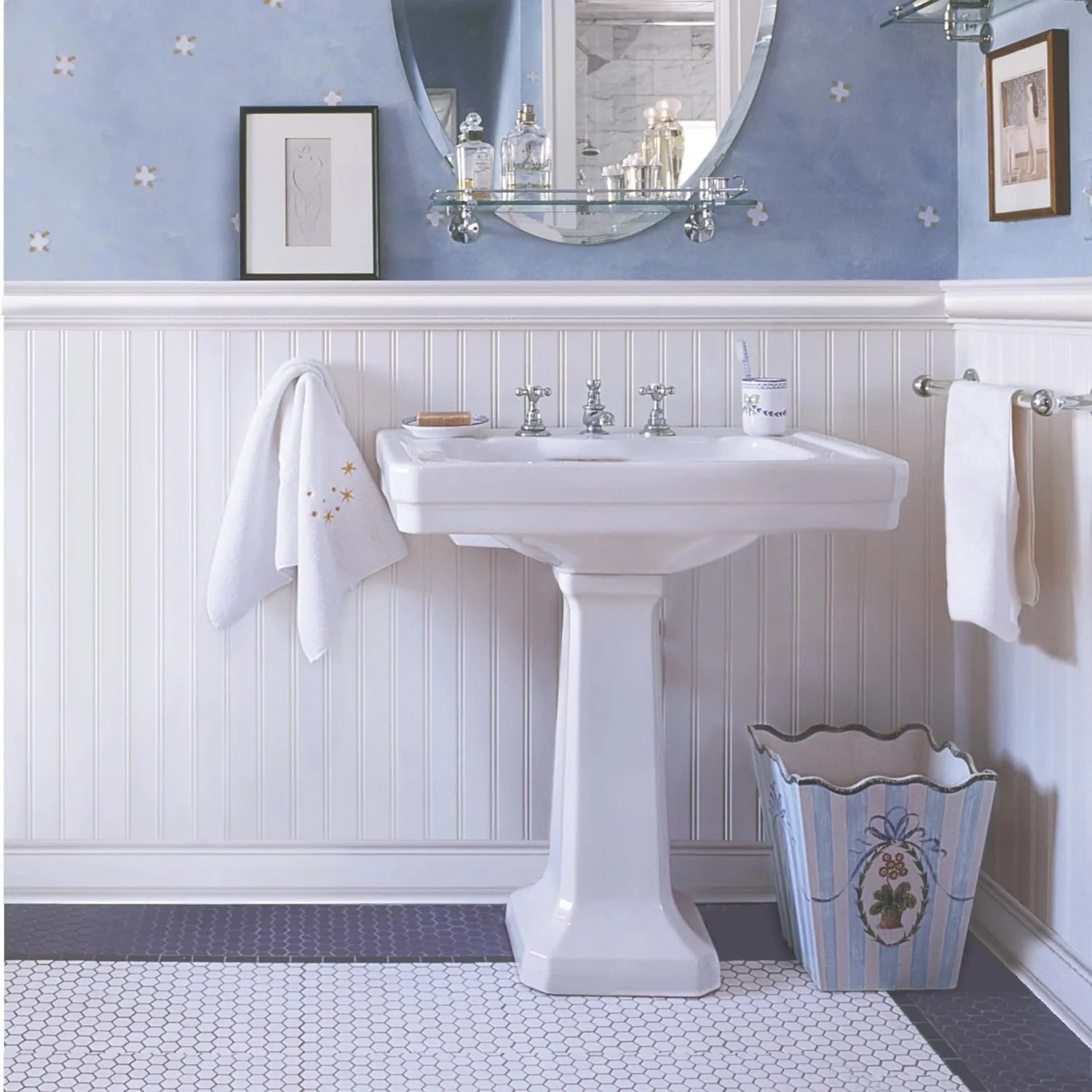
Beadboard is characterized by narrow, evenly spaced vertical grooves that create fine, consistent repetition. Traditionally made from tongue-and-groove boards, it introduces texture without much visual weight.
This style is most often used in bathrooms, kitchens, laundry rooms, and mudrooms, where durability and subtle patterning matter. The vertical lines can visually extend wall height, especially when the paneling runs higher than a traditional chair rail. In restrained palettes, beadboard can feel quietly classic rather than overtly casual.
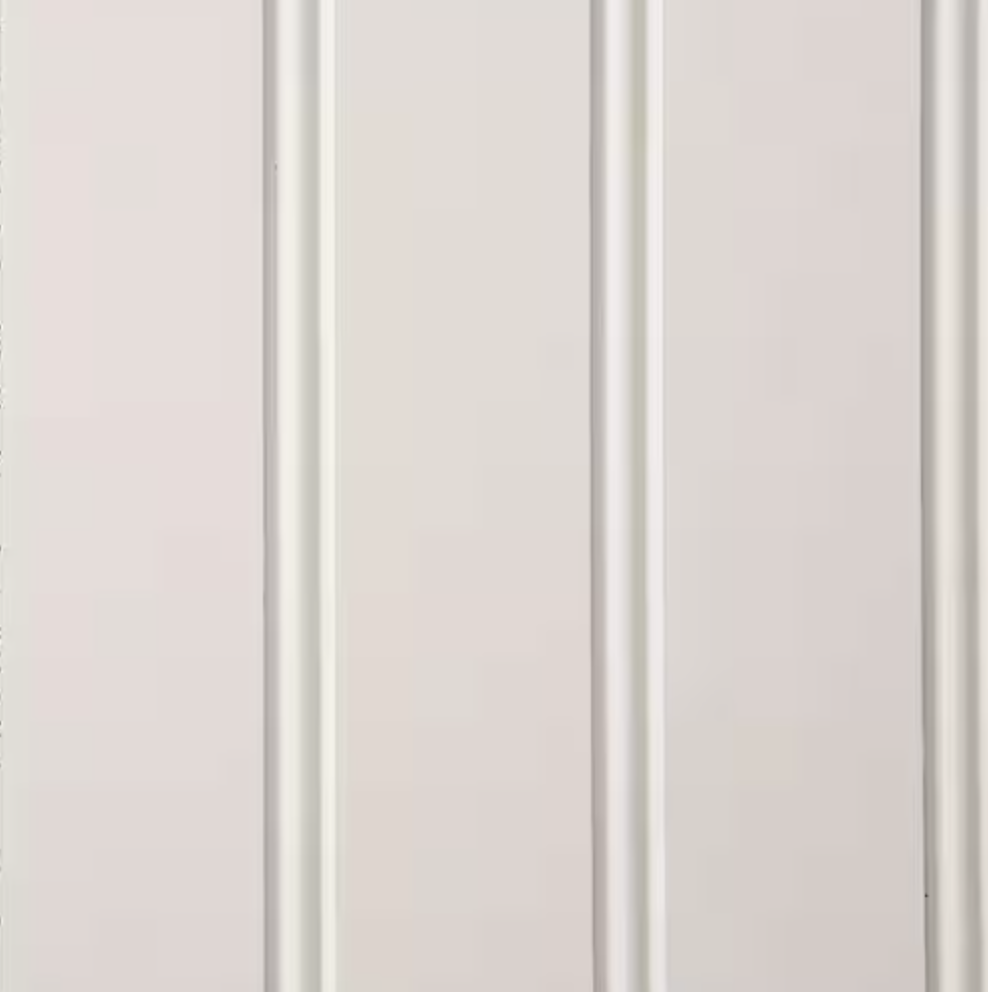
The Home Depot | 32 sq. ft. 3/16 in. x 48 in. x 96 in. Beadboard White True Bead Panel | $29.98
The Home Depot | WoodHaven 5 in x 7 ft Beadboard Tongue and Groove Ceiling Plank (29 sq. ft./Case) | $148.32/case($5.11 /sq.ft.)

The Home Depot | 3/16 in. x 32 in. x 48 in. White True Bead Wainscot Panel | $14.98
Amazon | PVC Wall Panels - 3 Foot Accent Wall Panels Reversible for Interior Wall Decor, Easy to Install Wainscoting Panels for Wall Home Decor (6 Piece) | $76.02
Panel Wainscoting
Panel wainscoting is defined by framed sections that break the wall into larger, more deliberate proportions. This category includes several distinct subtypes that vary primarily by depth and ornamentation.
Flat Panel (Recessed Panel)
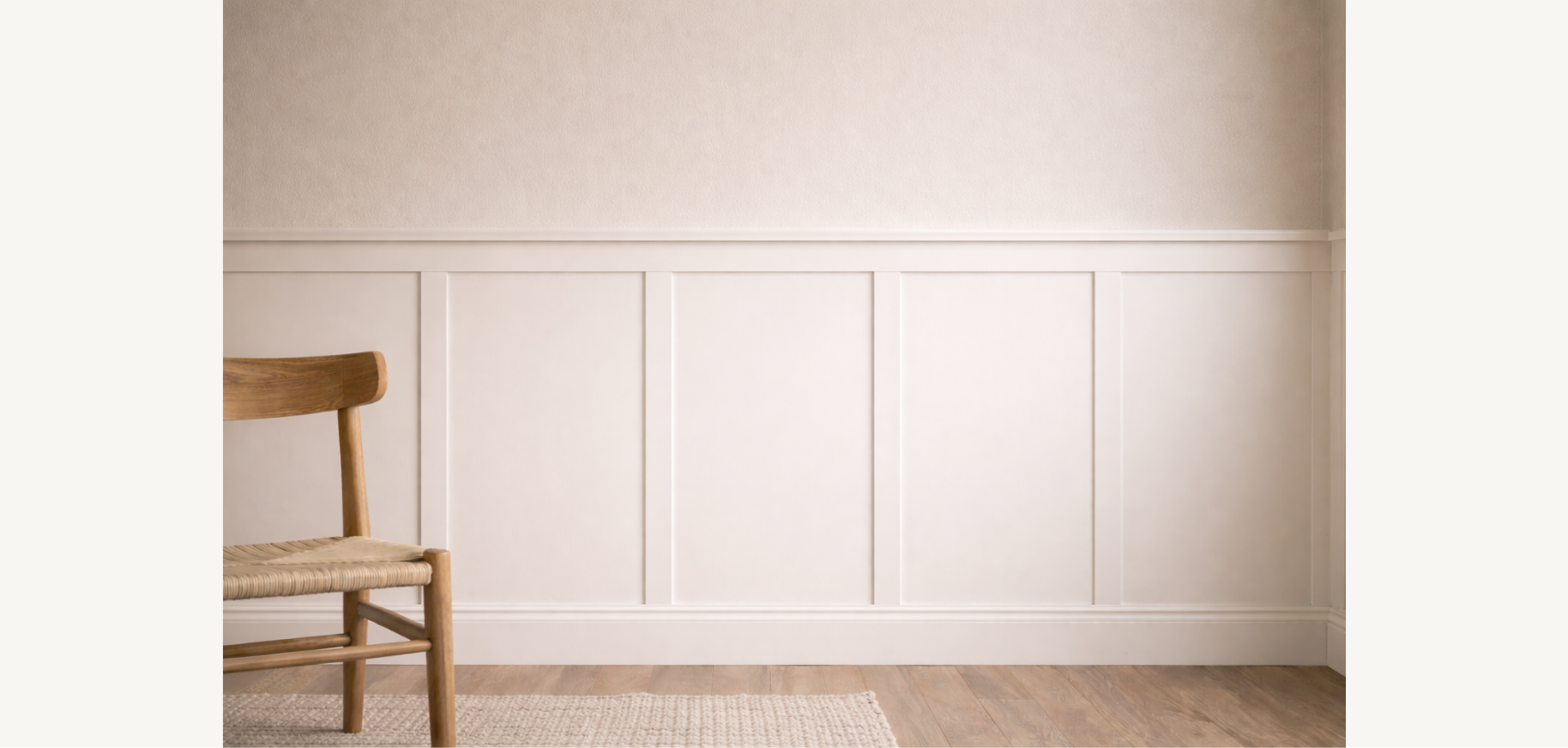
Flat panel wainscoting uses trim to outline panels while keeping the panel face smooth and recessed. The result is clean, architectural, and flexible.
Because there is little surface detail, proportion does most of the work. Wider panels and consistent spacing tend to feel calmer and more intentional. This style works especially well in modern, transitional, and minimal interiors, and in smaller spaces where heavier detailing could feel overwhelming.
Shaker-style paneling — square-edged trim with minimal molding — falls within this category. It typically uses square-edged trim with no decorative molding, allowing the wall to feel structured without ornamentation.
Board and Batten
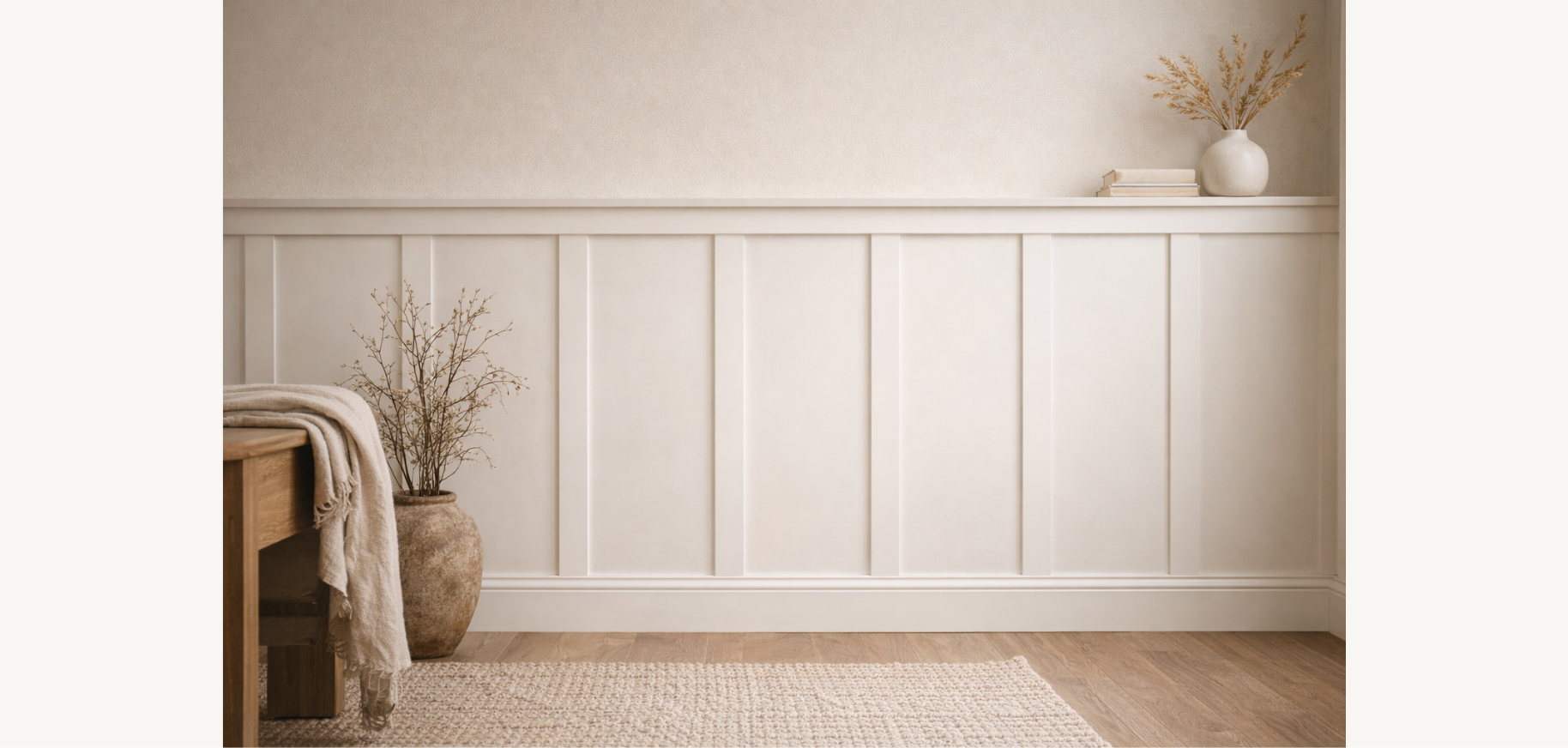
Board and batten is technically a subtype of flat panel wainscoting. It consists of flat wall panels with vertical battens applied on top, creating strong linear rhythm.
The battens are wider than beadboard grooves but slimmer than traditional panel frames, giving the wall a more graphic, architectural feel. This style is often installed taller than other types, commonly between 48 and 60 inches, and finished with a substantial top rail.
Board and batten works well in transitional homes, modern farmhouses, and spaces that need structure without heavy ornamentation.
Common variations include:
Grid layouts, where horizontal battens create square or rectangular panels
Full-height applications, where battens extend from floor to ceiling
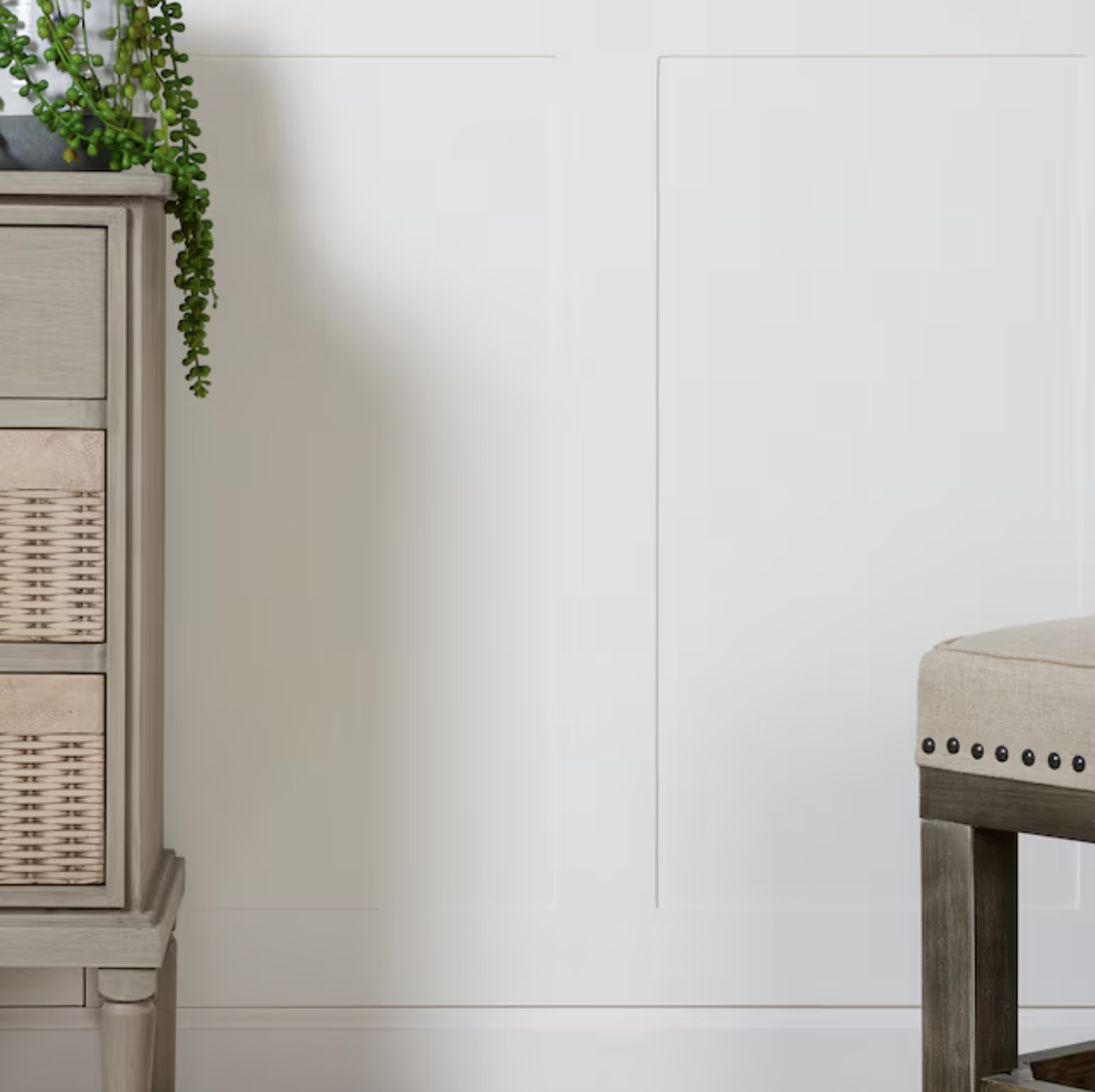
Lowe's | Style Selections 7/32-in x 48-in x 32-in Smooth White MDF Wainscoting Geometric Wall Panel | ~$20
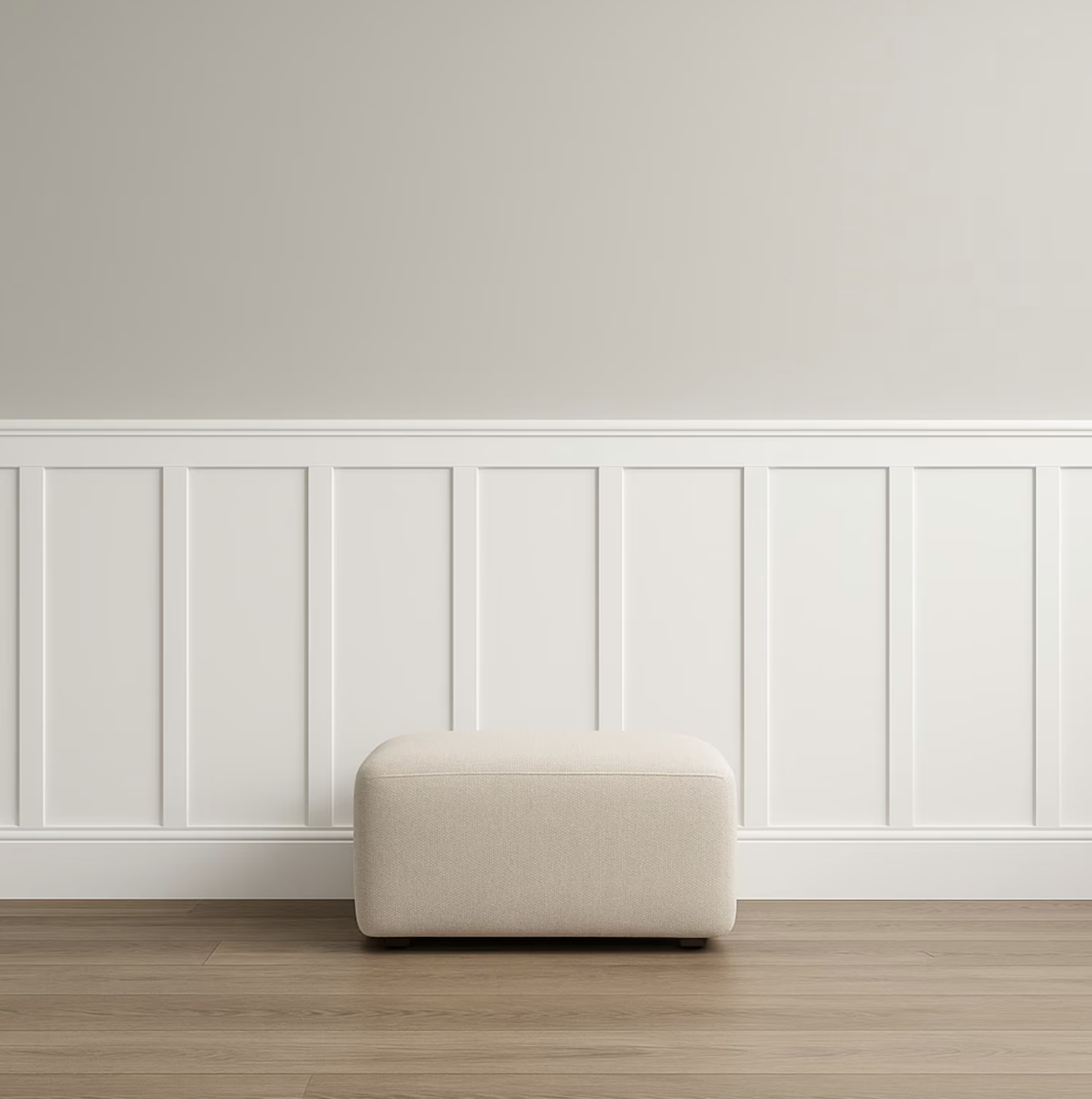
Etsy | Shaker Wall Paneling Kit: Ready Assemble Wainscoting, Primed Molding | $82
Raised Panel
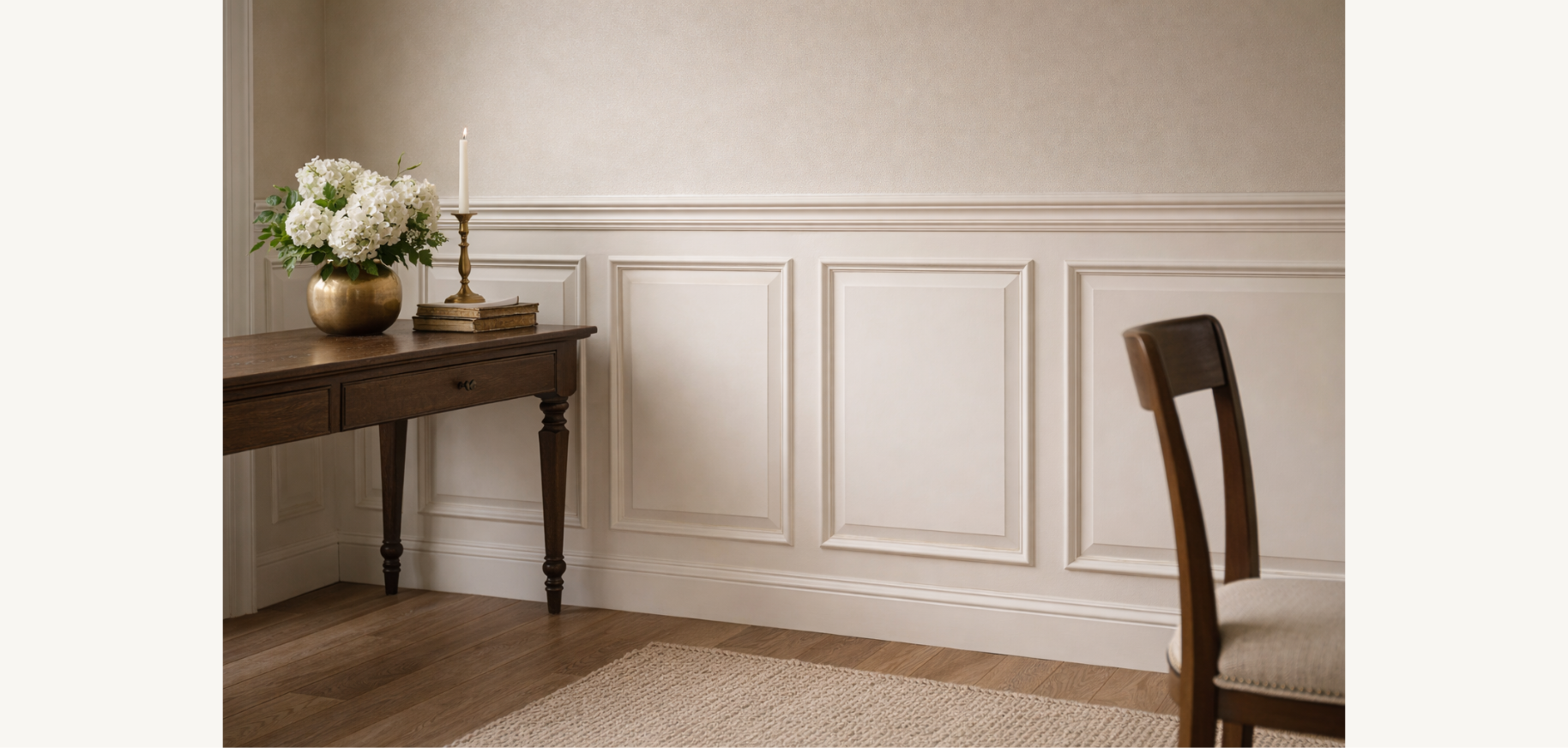
Raised panel wainscoting features beveled or molded panel faces that project outward, creating deeper shadow lines and a more formal presence.
This style is rooted in traditional architecture and tends to feel visually heavier. Panel size, spacing, and overall height need to be carefully considered to avoid crowding the wall. Raised panel wainscoting pairs naturally with crown molding and detailed trim packages, and is most often used in dining rooms, libraries, and formal living areas.

The Home Depot | 1/4 in. x 32 in. x 48 in. MDF Wainscot Panel | $18.98

The Home Depot | 32"W x 18"H x 5/8"P Legacy Raised Panel Decorative Wall Panel | $23.15
Horizontal Paneling
Shiplap
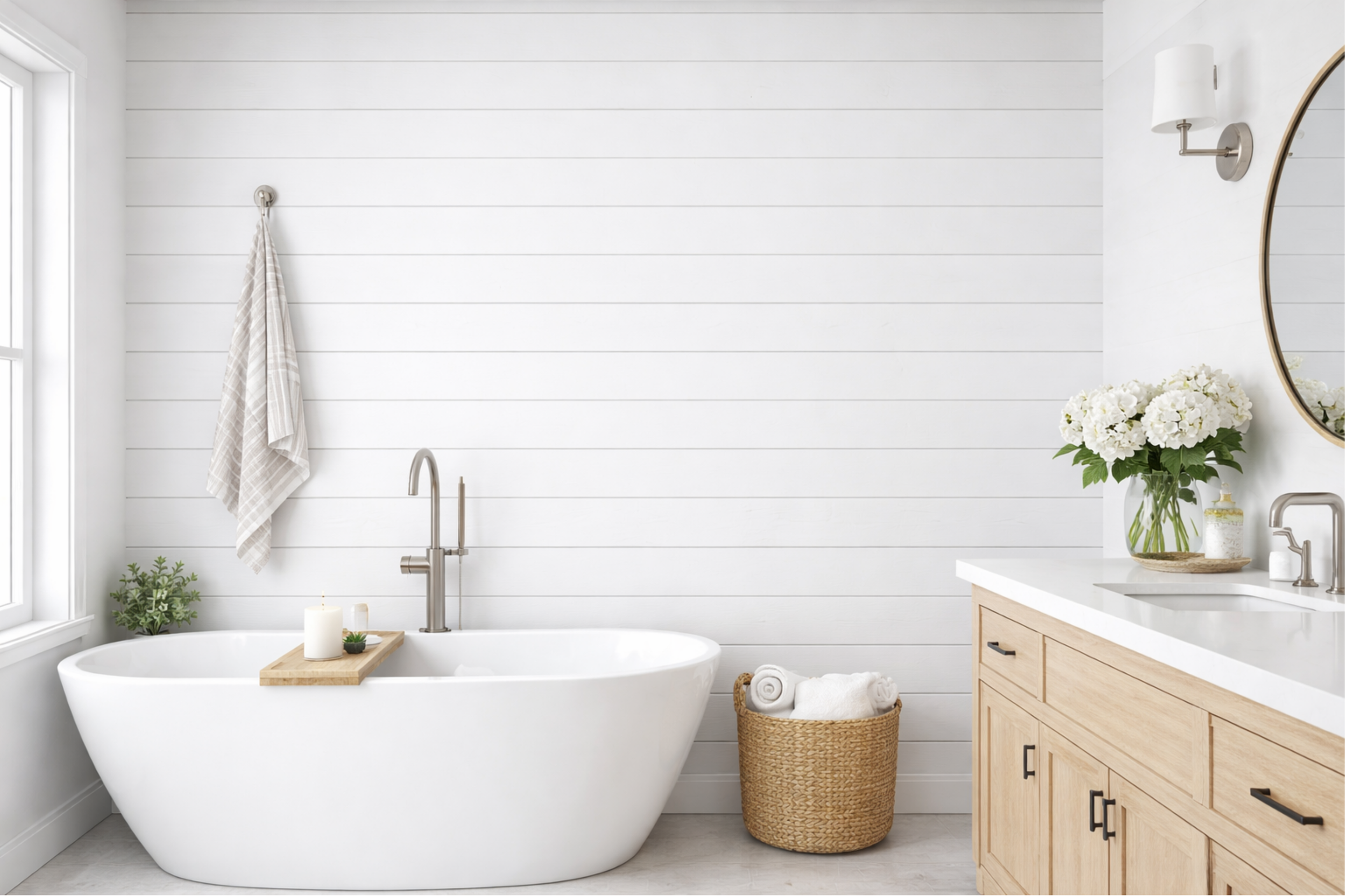
Shiplap uses overlapping horizontal boards with a rabbet joint that creates a soft shadow line. The overlap introduces subtle depth, which keeps the wall from feeling flat.
It tends to feel relaxed and textural rather than precise.
Nickel Gap
Nickel gap uses flat boards installed with a consistent, narrow spacer between them. Unlike shiplap, the boards do not overlap. The shadow line comes from spacing rather than structure. The result feels cleaner and more controlled, especially once painted.
Because horizontal lines emphasize width, both styles can make rooms feel broader and more relaxed. They work best when the surrounding finishes are visually quiet, allowing the paneling to read as texture rather than pattern.
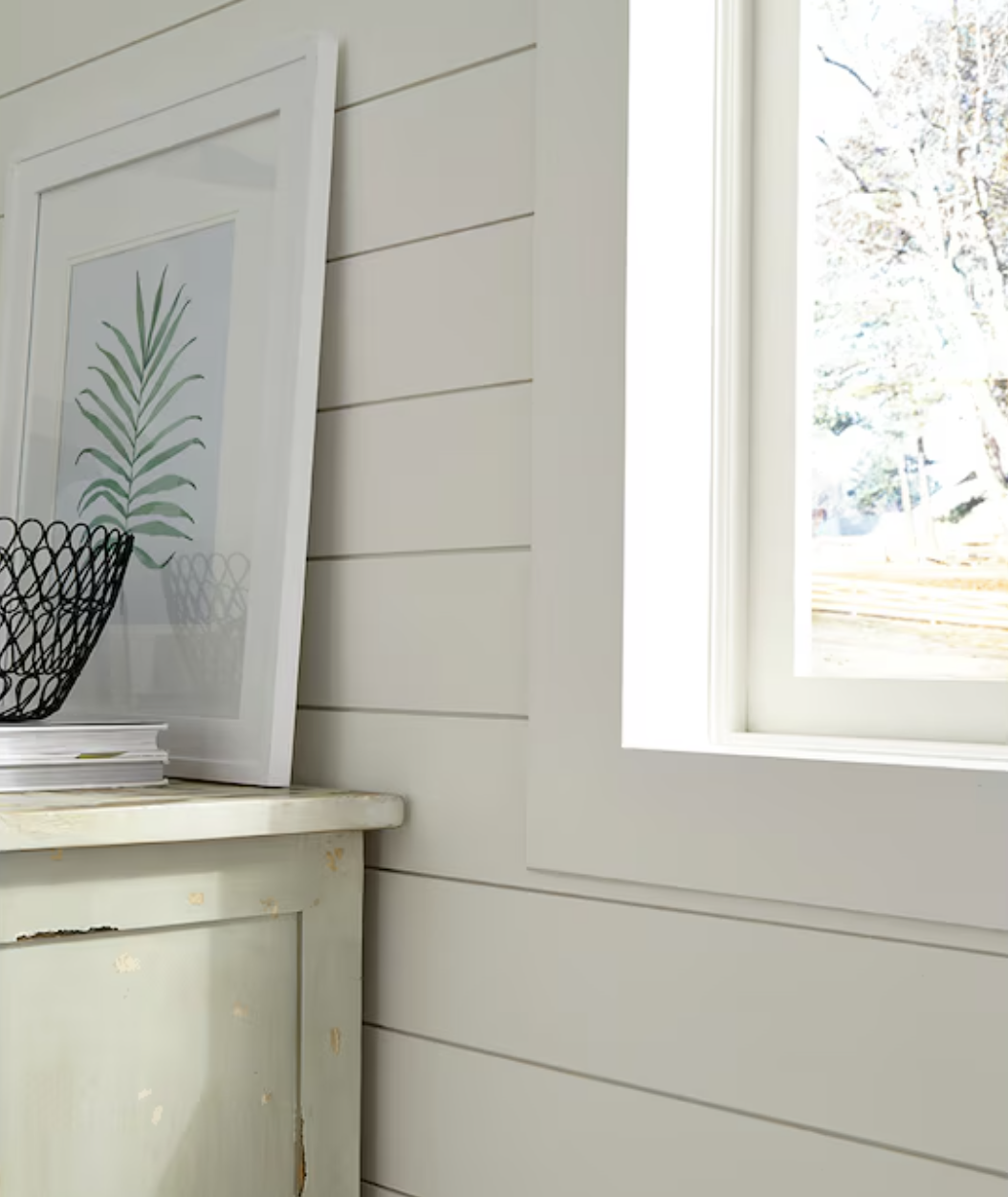
Lowe’s | allen + roth 9/16-in x 5-1/4-in x 12-ft Painted White Pine Wood Shiplap Smooth Wall Plank | $14.94

The Home Depot | 7/32 in. x 48 in. x 96 in. White Nickel Gap Shiplap Panel |
Finishes and Paint Choices
Wood vs. Paint
Natural wood wainscoting highlights grain and texture and tends to feel warmer and more traditional. It works especially well in historic homes or spaces aiming for a classic, European feel.
Painted wainscoting is more common today and allows for greater flexibility. It can blend seamlessly into a space or contrast intentionally with wall color. Painted finishes also tend to be easier to maintain over time.
Gloss vs. Matte
Higher-gloss finishes reflect more light and are easier to wipe clean, making them practical for high-traffic areas. They also emphasize detail and molding profiles.
Matte or satin finishes feel softer and more modern. They minimize reflections and can make paneling feel more integrated with the wall rather than standing out as a separate element. Satin is often a good middle ground, offering durability without excessive shine.
Final Thoughts
Wainscoting is one of those elements that quietly elevates a space. Whether the goal is subtle structure or strong architectural presence, thoughtful proportions and finishes make the difference. When done well, wainscoting doesn’t announce itself—it simply makes a room feel finished.
