Why Floor-to-Ceiling Curtains Work (Even When the Windows Don’t)
Disclaimer: As an Associate I earn from qualifying purchases at no extra cost to you. See more here.

Floor-to-ceiling curtains are one of those decisions that quietly change how a room feels. They soften edges, slow the eye down, and bring an architectural calm that’s hard to achieve with furniture alone. The surprise is that they work just as well on standard windows as they do on dramatic glazing.
What’s doing the work isn’t the window. It’s the proportion.
When fabric runs from ceiling to floor, the room reads taller, more settled, and more deliberate. The curtains stop feeling like an accessory and start acting like part of the architecture.
Curtains as a Soft Architectural Layer
Most rooms have a little awkwardness around the window: extra space above the trim, inconsistent window heights, or ceilings that feel visually empty. Floor-to-ceiling curtains smooth that out.
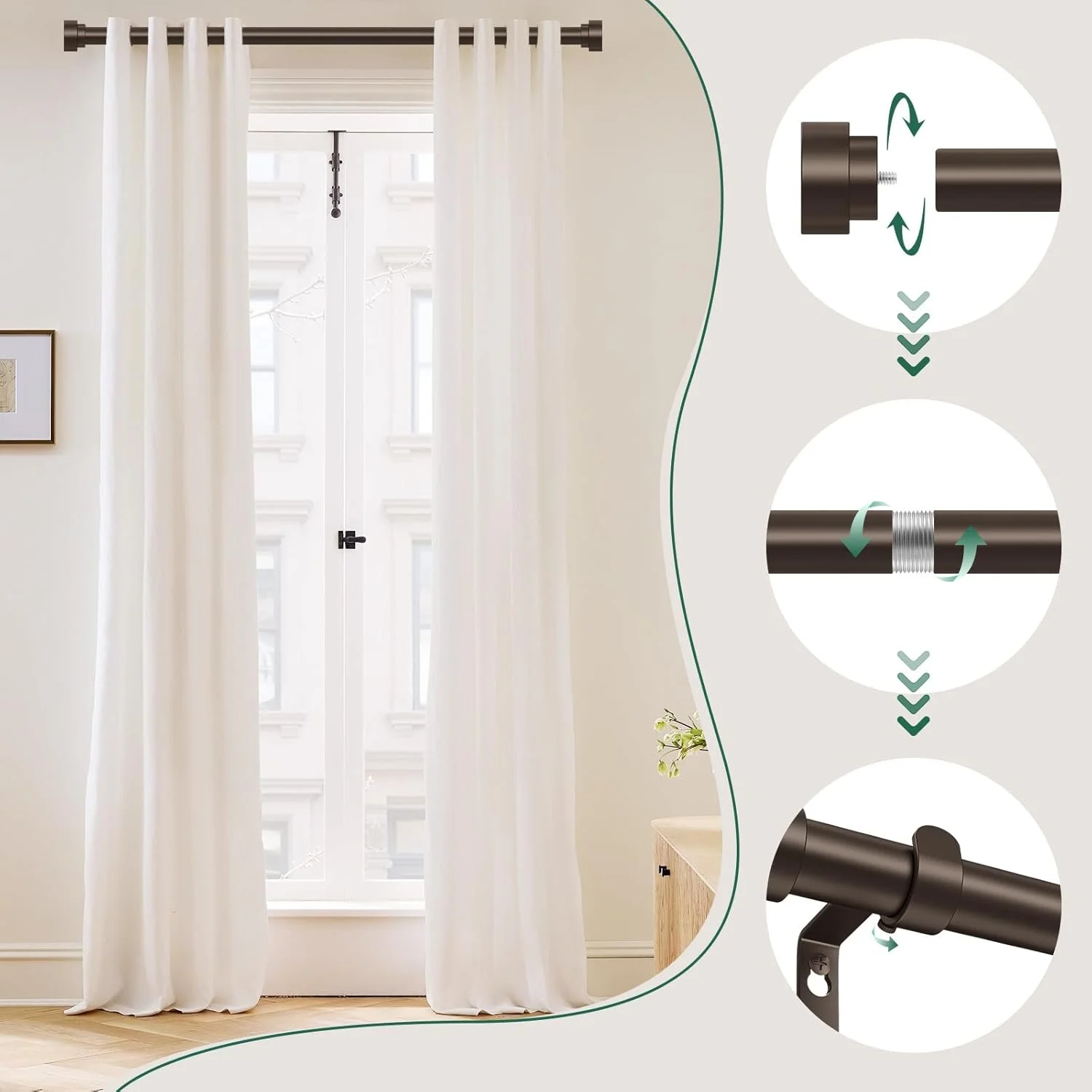
Mount the rod high and let the fabric fall uninterrupted to the floor, and the wall becomes one continuous vertical plane. The window becomes secondary. Your eye reads height first, not the break.
This is why it works especially well in bedrooms, guest rooms, and offices. Those rooms benefit from softness, but they don’t always need more objects. Fabric adds texture without busyness, absorbs light rather than bouncing it back, and pulls the room away from anything that feels rigid or overly crisp.
Light Control Without Visual Heaviness
Full-height curtains don’t automatically make a room darker. Often they do the opposite, because they let you control the light without breaking up the wall.
Sheer or semi-sheer panels filter light instead of blocking it, creating a diffused glow that feels private without feeling closed off. Lined or blackout panels add real function, but when they’re cut full-length they read as a calm surface rather than a utilitarian add-on.
The key distinction is that the curtains are allowed to exist as an intentional presence.
Rod Height and Placement
Rod placement does most of the visual work here.
Mounting close to the ceiling lets the curtains borrow height from the room itself. A small margin at the top keeps the hardware from feeling cramped; a clean hem just above the floor keeps the panels from looking accidental or collecting wear.
Extend the rod past the window on both sides. This lets the panels stack mostly off the glass when open, which preserves light and makes the window feel wider than it is.
This is why floor-to-ceiling curtains work even on smaller windows. The treatment belongs to the wall, not the frame.
Panel Count and Fullness
Curtains rarely look right when they are stretched flat.
A fuller look, with folds even when closed, gives the fabric dimension and weight. It’s the difference between something that feels like a soft wall and something that reads like a thin cover.
As a general approach, using more panels than strictly necessary creates softness. When the fabric has somewhere to go, it reads as intentional texture instead of a thin covering. This matters most with lightweight fabrics. Sheers need volume to feel substantial. More fullness also changes movement: panels open more smoothly, layer better, and never look like they’re working too hard.
Curtain Hardware, From Simple to Advanced
Hardware matters, but it doesn’t need to be precious.
At the simplest end, a clean rod with understated finials does exactly what it needs to do. What matters most is scale. The rod should feel sturdy enough to support the fabric visually, not just physically.
More advanced systems, including ceiling-mounted tracks or automated options, change how the curtains interact with the room. Tracks allow the fabric to feel even more architectural, especially when recessed or closely aligned with the ceiling plane. Automated systems add ease and consistency, particularly in bedrooms or large living spaces, but visually they work because the mechanics disappear.
The common thread is restraint. If the hardware is the feature, the curtains start to look like an accessory again.
Where Floor-to-Ceiling Curtains Make the Biggest Impact
This treatment tends to shine in rooms that benefit from calm and softness.
Bedrooms feel more finished and insulated, even during the day. Guest rooms immediately read “considered”, regardless of the home’s age or window size. Offices lose their corporate edge and gain warmth without introducing clutter.
Living rooms benefit too, especially when the space leans structured—clean-lined furniture, hard surfaces, minimal palettes. Curtains act as the counterweight.
In each case, the curtains aren’t decorative. They’re doing spatial work.
A Few Things That Change the Outcome
Fabric weight changes the room’s tone. The same beige can feel airy in a linen blend and formal in a heavy weave.
Lining affects more than light control. It changes how the panels hang and how clean the folds look.
Color can either dissolve the wall (close to wall color) or frame the window (higher contrast). Neither is “better.” They just do different things.
There’s also the question of maintenance. Floor-length panels collect dust differently than shorter treatments, which may influence fabric choice in high-traffic rooms. And in spaces with baseboard heaters or vents, clearance and airflow matter more than aesthetics alone.
The Takeaway
Floor-to-ceiling curtains work because they shift attention away from the window and onto the room as a whole. They elongate, soften, and quiet a space without needing more decor.
Whether the windows are tall, short, or somewhere in between becomes secondary. The room reads intentional first.
Shop the Look
Curtain Hardware (Rods & Track Systems)





Curtains / Panels