Why Larger Furniture Often Makes a Small Living Room Feel Bigger
Disclaimer: As an Associate I earn from qualifying purchases at no extra cost to you. See more here.
There's a common instinct when furnishing a small apartment: choose small furniture so the room doesn't feel crowded. It makes logical sense, but in practice, the opposite tends to happen. Rooms filled with undersized pieces often feel busier and less resolved than rooms anchored by fewer, larger ones. Understanding why that reversal occurs can change how you approach a compact living room entirely.
The Problem with Too Many Small Pieces
When a small living room holds a loveseat, a narrow console, a couple of slim side tables, a small bookshelf, and a compact media stand, the room doesn't read as open. It reads as scattered. Each piece occupies its own pocket of space, and your eye has to account for every one of them separately, including the gaps between them, the different heights, the various materials competing at close range. What registers visually isn't the square footage you saved by choosing smaller items. It's the number of objects. A room with eight small pieces of furniture has eight outlines, eight shadows, eight moments where your eye stops and restarts. That quantity creates visual noise, and in a small footprint, there's nowhere for that noise to dissipate. The room begins to feel cluttered not because it lacks space, but because it lacks clarity.
Fewer Pieces, Fewer Decisions for the Eye
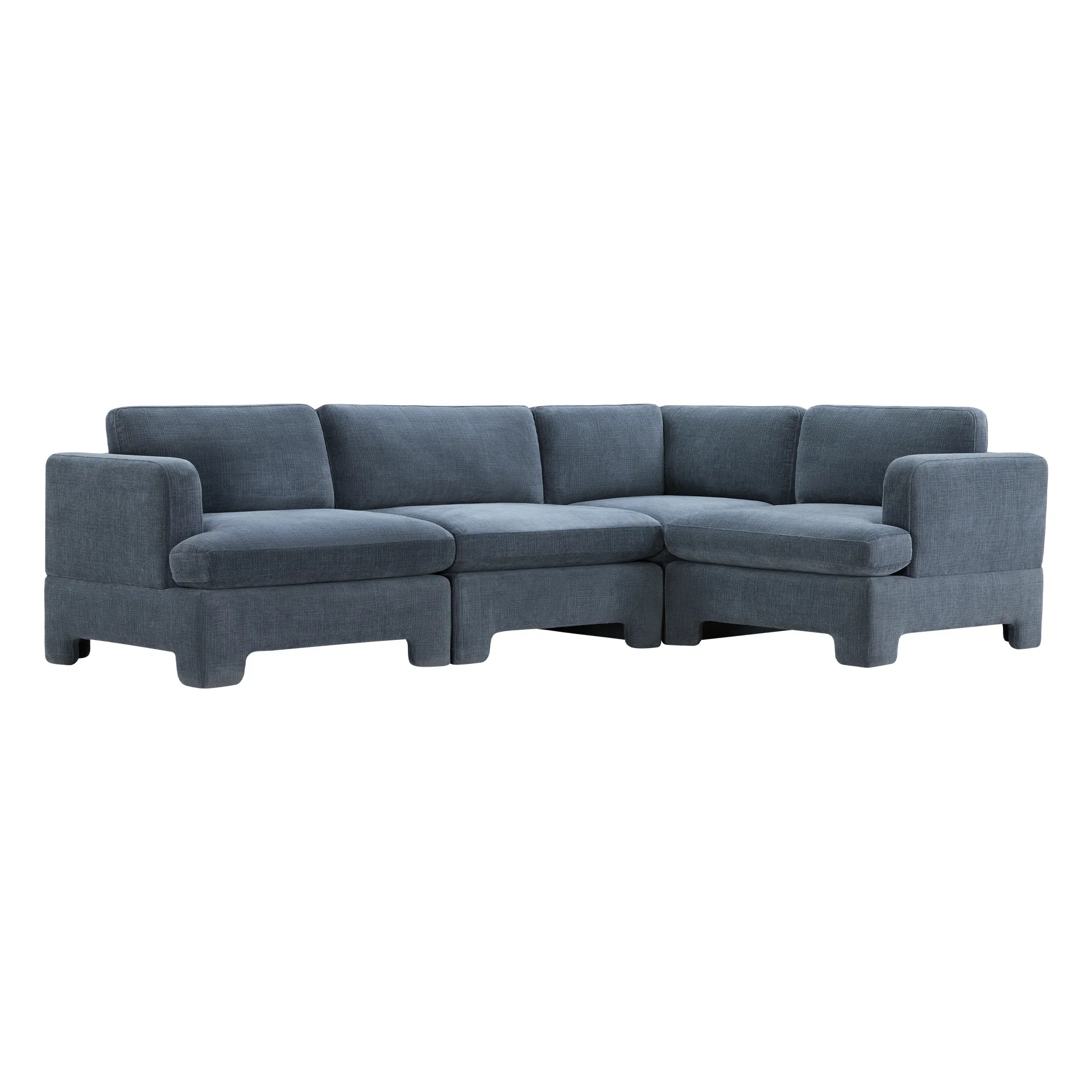
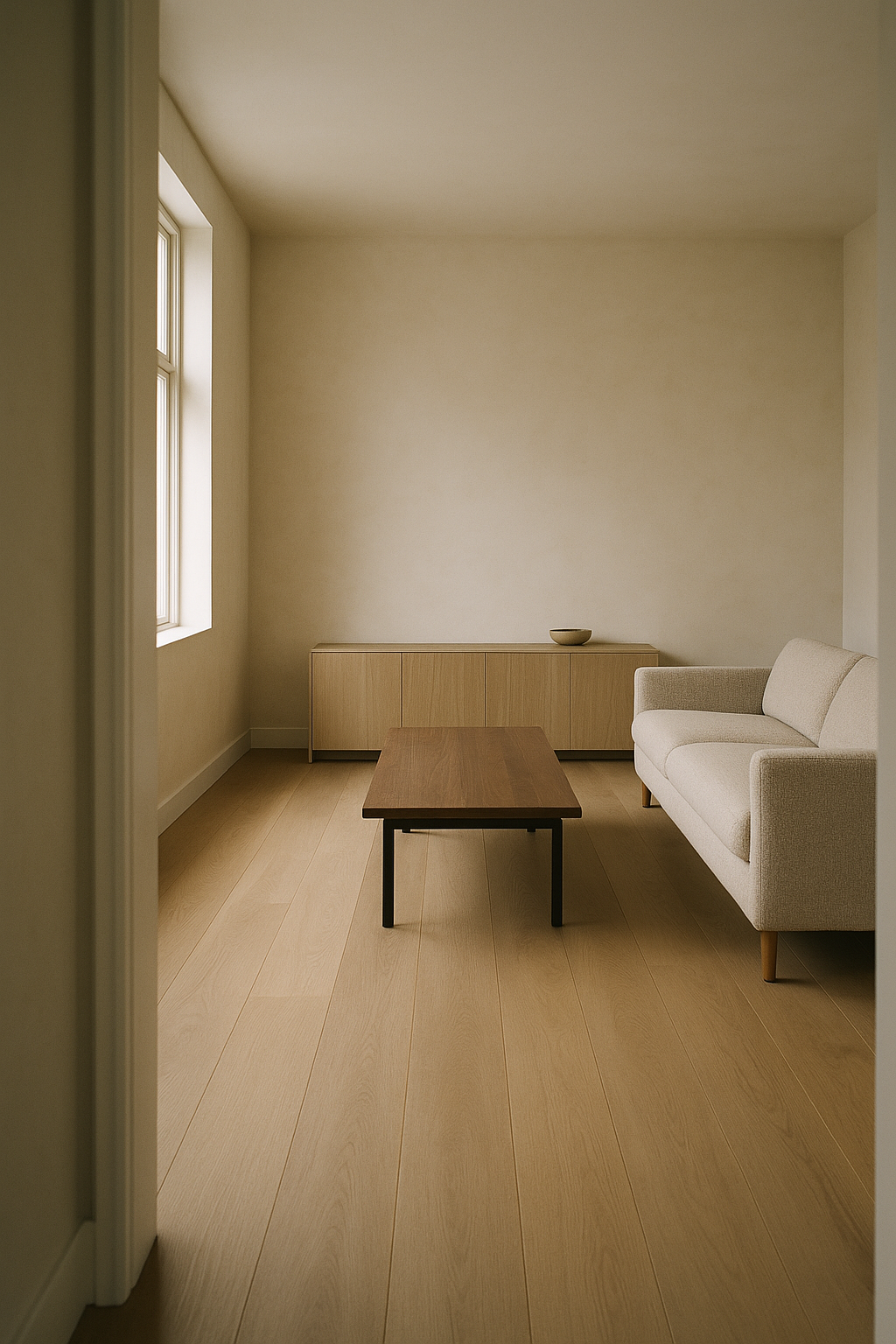
A living room that uses a full-size sofa, a substantial coffee table, and one or two well-scaled supporting pieces tends to feel calmer — even if the total square footage of furniture is roughly the same. The difference is in how many visual events the room contains. A generous sofa anchors the seating area in one clear gesture. A wide coffee table in front of it reinforces that gesture rather than fragmenting it. When fewer objects define the room, the negative space between them reads as intentional rather than leftover. The floor plan breathes, and the eye moves through it in longer, smoother passes instead of darting between a constellation of small items. This is the counterintuitive part: a room with less furniture in it can actually feel more spacious than a room with more furniture that happens to be smaller. Scale creates hierarchy, and hierarchy creates calm.
Large Furniture Does More Practical Work
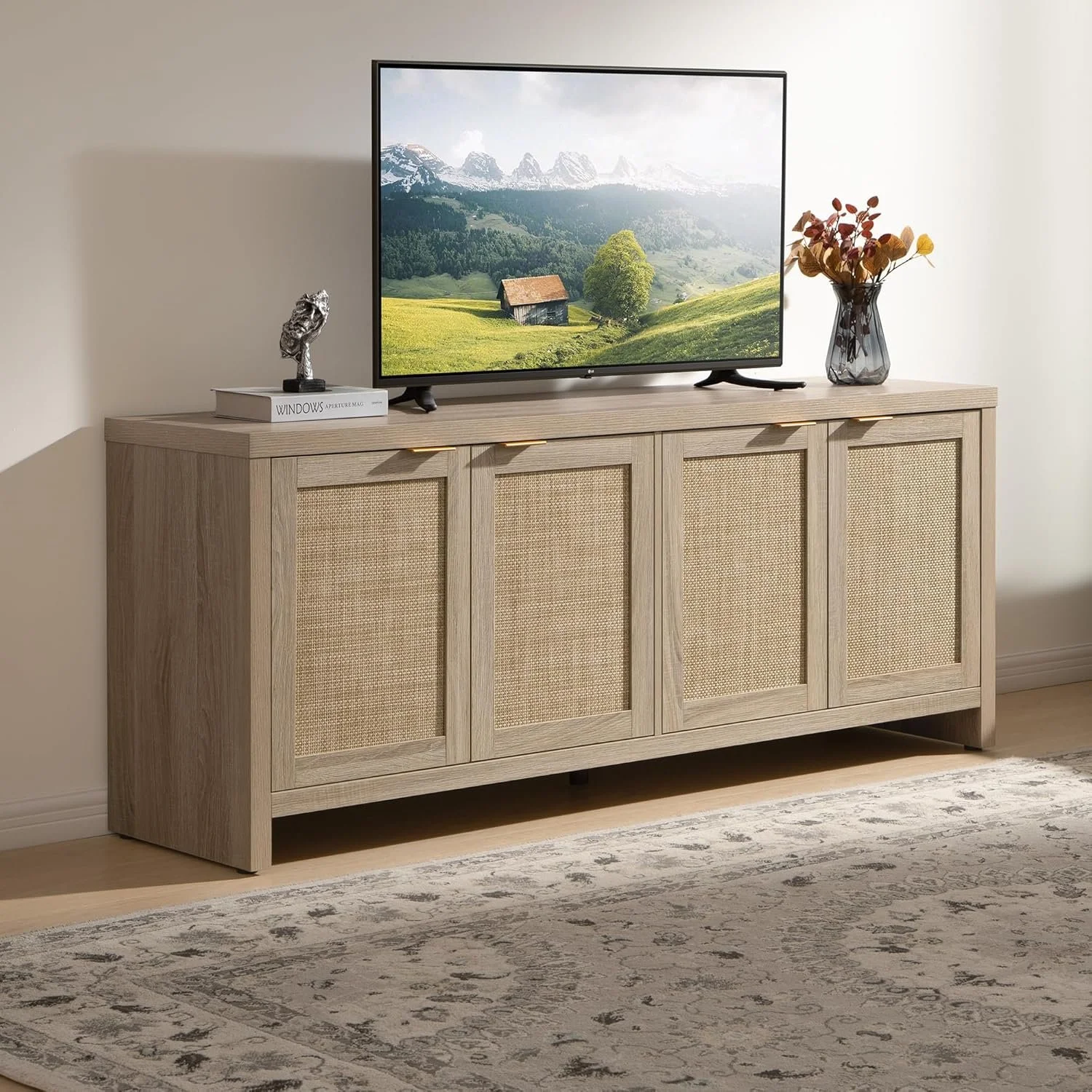
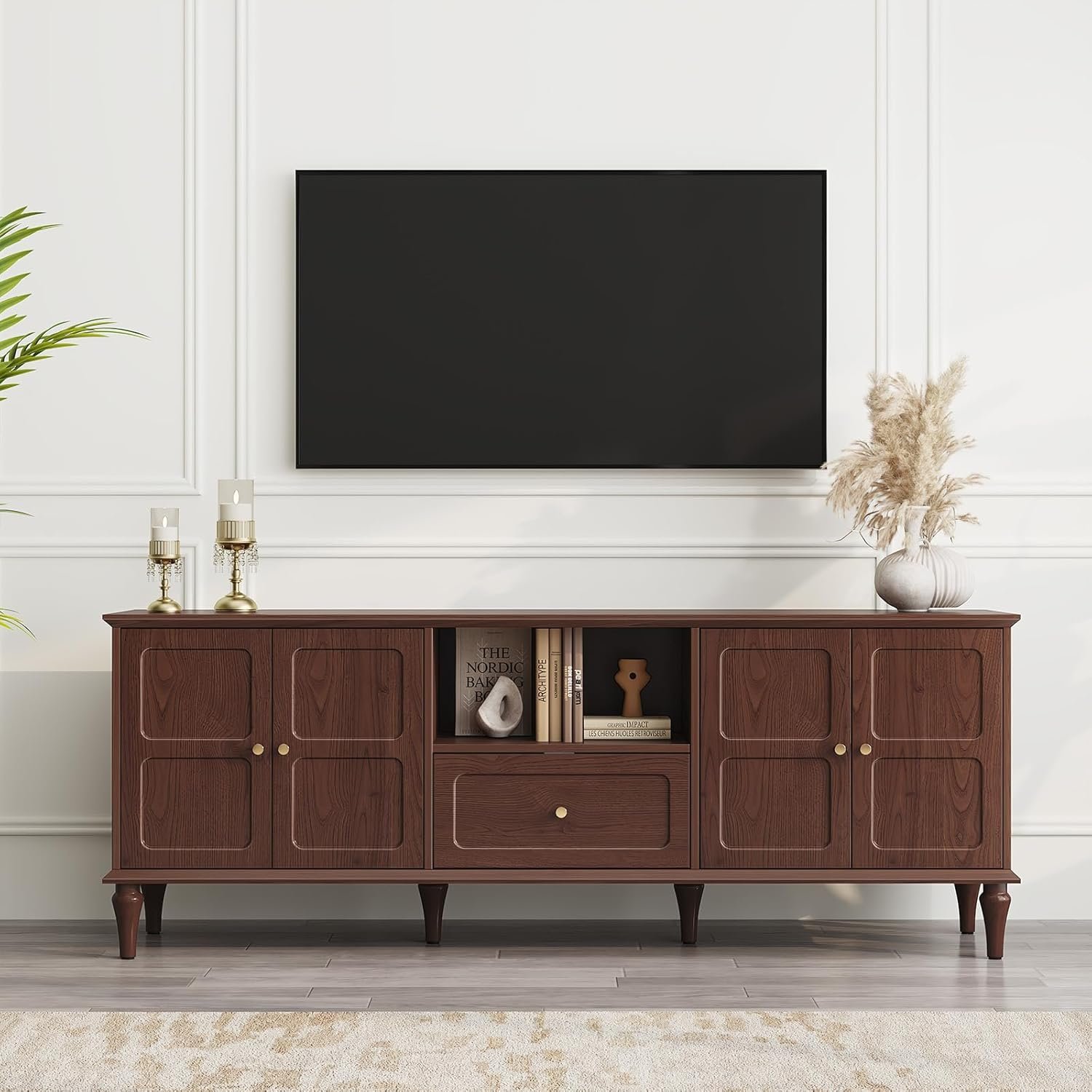
Beyond the visual effect, bigger pieces tend to carry more functional weight. A full-depth media console with closed storage holds streaming devices, cables, books, and games behind a single clean face. A wide credenza along one wall can absorb everything from throw blankets to board games to mail that would otherwise land on a side table or countertop. In a small apartment, every surface that isn't doing double duty becomes a surface that collects things passively. A narrow entry table holds keys, then mail, then sunglasses, then a water bottle, and suddenly it looks overwhelmed. A deeper console with a drawer absorbs most of that invisibly. The surface stays clear because the storage exists where you need it, built into the footprint of furniture you'd have anyway. A sofa with a fuller frame often provides more comfortable seating for the same linear footage as a compact alternative, too. When you sit on it, it feels like a real place to be, not a concession to the apartment's dimensions. That sense of substance matters in a room you spend hours in every day.
Filling Space with Intention
There's a meaningful difference between a room that's full and a room that's furnished. A room that's full has too many things competing for attention. A room that's furnished has pieces that were chosen to occupy the space deliberately, at a scale that matches the room's proportions rather than shrinking away from them. One large-scale piece placed with breathing room around it communicates confidence. It says the room was considered, not just filled incrementally as needs came up. And when that piece does real work — storing things, anchoring the seating plan, setting the material tone for the room — it earns its footprint twice over.
Applying This in Your Own Space
If your apartment living room currently feels busy or cramped, it's worth counting the number of individual furniture pieces before assuming you need less furniture overall. Rooms with six or seven small items often improve when consolidated into three or four larger ones. A single bookcase with real depth can replace a narrow shelf and a side table. A proper sofa can take the place of a loveseat and an accent chair that were splitting the same job between them. Each trade reduces the visual count while maintaining, or increasing, what the room can actually hold and do. The goal isn't to force oversized furniture into a tight floor plan. It's to match the scale of each piece to the role it plays, and to let fewer pieces carry more of the room's weight. A small living room doesn't need small furniture. It needs fewer, more purposeful decisions and the breathing room that follows from making them.
Shop the Look
Television Stands
Seating